by Volker Brendel and Sanford Baran
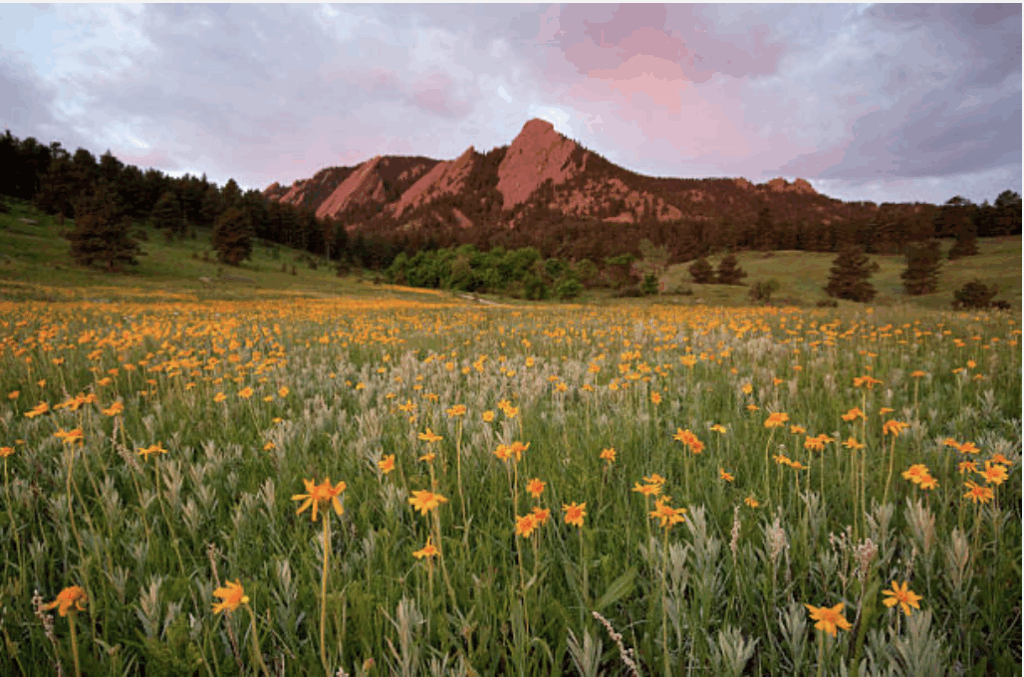
Volker Brendel: Hello, friends! It’s a great pleasure to be with you. It’s been about seven years since I last was in Colorado; it was about time to return. The first impression coming back is that you see familiar sights, street names, and so forth. The airport looks the same. I-25 is still a mess. And, of course, there are the majestic Rocky Mountains—to my eyes, unchanged. Rock solid, you might say. It’s comforting to have some things that can be relied on that don’t change or at least don’t change rapidly.
In the same vein, I very much appreciate the consistency exhibited by this group: meeting every two weeks, consistently on tone, providing a point of stability in a world that to many feels uncertain. Particularly in these days, I’ve talked to many people from different walks of life, and there seems to be a prevalent feeling of unease: changes are either happening already or looming, associated with a sense of foreboding. Some things that we used to take for granted are fading away, and this can be very disruptive, or at minimum unsettling.
We don’t need to rehearse all the different aspects of this, but climate change could be mentioned, with catastrophic events seemingly happening every few months. For many people, particularly in the United States, certain societal structures that we have taken for granted are disappearing, for example in the educational realm and with respect to our research infrastructure. AI is changing our worlds. And the list of changes goes on. For some people, they’re losing their livelihood and need to move, change careers, and so forth. And for other people, it’s just a general feeling of being in odd, uncertain times where we can’t predict with any confidence how our lives will shape up.
All this is unsettling. Now, life seems to have these two somewhat opposing forces: the forces that preserve forms, like the Rocky Mountains that are still here; cows look like cows; every generation of trees from the same seeds look very similar to their parental trees, and so forth. This is evidence of life forces that preserve. And there’s another aspect of life, the forces that innovate, that reshape. I would suggest that the mastery of the art of living entails having a sense of both these forces and a sense when which force needs to be prevalent.
We know if we do not change forms, the forms ossify and become mostly useless. And if we change too much, we lose appreciation for what’s actually working. So, I thought this morning we could look at the art of finding balance in this and see how we can playfully explore it. Most people, I would say, live mostly in the world of form. That’s what they see. That’s what they’re comfortable with. And they hardly ever see beyond that to the creative aspects of life, except for very practical, pragmatic aspects of their situations.
This can, in some circumstances, be quite boring. I’ll give you an example from my own life. I sometimes have to go to receptions: lots of people in a relatively small room, lots of noise, and lots of what I would call small talk. I try to avoid the small talk. Typically, what happens is this: people come up to you and ask, “So what do you do?”
To make this potentially more creative, I came up with a little device to engage people in more interesting topics. My first response is to furtively look over my shoulder. This is to give the impression that I am concerned that there may be someone behind me that this person is addressing and I need to establish that they really want to talk to me. Okay, and then I say, “Oh, I’m an accountant.” Now there’s an art to saying this. You have to look down, and your voice must drop a little. 70% of people will then look at the glass in their hand. It doesn’t matter whether it’s full or empty or half full. And they will say, “Well, I really should get another drink,” and then they are gone.
Then there is another 20% of folk. Now these are the types of people who watch TV and read thriller novels and so on, so they’ve heard of the term “forensic accountant.” They think, well maybe this guy has a story to tell of how he single-handedly took on a large corporation or mafia clan and figured out how they cooked the books and unraveled the facts; and maybe there are some great stories here. These are the people who will ask (with a hint of hope in their voice), “Ah, what kind of accountant are you?” Then I say, “Well I’m a DNA accountant.” So, they look at the glass in their hand. It doesn’t matter whether it’s full or half full or empty. They say, “Well I really should get another drink.” And they’re gone.
Now there’s the remaining 10% of people who say, “DNA accountant? What is that? Never heard of it. Sounds interesting.” These are the people I like to talk to because they have some curiosity.
So, this is a wonderful little device to get into interesting conversations. This may not work for you, but we can change it up in all kinds of ways. You find yourself in a similar situation. Somebody comes up to you: what do you do? You reply, “I’m an emissary.” Now, “emissary” is an odd word. It’s not very common. Thus, 70% of people will think, okay, this is a conceited delivery guy. I mean he brings something to the door. At best, maybe he delivers a singing telegram. So what do 70% of people do? They look at the glass in their hand. Doesn’t matter whether it’s full or empty or half full. They say, “Ah, I really should get another drink” and turn away.
And then there is the next 20% of people. These are the people who watch TV, thrillers, movies, that type of thing, read crime novels. They think “emissary, well that’s a person who’s on a mission maybe to negotiate something. It could be entertaining.” So they ask, “What kind of emissary?” You reply, “Well, I’m an emissary of divine light.” Then they look at the glass in their hand. Doesn’t matter whether…[Okay, you know the routine by now]. And they’re gone. Then there is the 10% of people who say, “Emissary of divine light. That sounds really interesting.” And you have a conversation.
So, this is a playful way of engaging on a level that is beyond form. It’s an open door to both appreciate forms and to be associated with what creates forms, the creative aspect of spirit. Now there are many ways of engaging and challenging our own routines of how we do things that may threaten to ossify our own behavior. For example, most of us have certain routes that we take going from point A to point B. Maybe from your home you go to a store or a place of work or whatever. I find it very useful to change the route occasionally. Instead of going the fastest way, I go the most scenic way, or maybe I can find an entirely new way of going to that place. This changes my perception and appreciation of what is in front of me. Another way might be to focus on particular aspects along the route. For example, sometimes I make a point of looking at every street sign and remembering the street names. And I find if I do this a second or third time, then this side street that I’ve gone by on a bicycle, slowly, maybe a hundred times, maybe two hundred times, becomes seen and known. I wouldn’t have been able to tell you the name of that side street until I made the effort of focusing on this aspect of my routine route.
Or maybe we can focus on houses one day or on trees another day. And suddenly we see things in a different way. As a last example of how we can mix up our standard modes of behavior, let’s playfully look at the form of our roll call at the beginning of the hour. How about (just hypothetically) arranging the sign-in going from west to east instead of the familiar from east to west? We’d be starting with people in the Pacific time zone. And then we go to the Mountain time zone, and then to the Central time zone, and so forth. Or maybe sign in from north to south: starting at the North Pole and working our way down to Antarctica. Presumably, our friends in Alaska and Canada would be first. But my favorite variant would be calling in by age. Let’s hear from everybody over the age of 95. Then we go down in intervals of five years until we reach age 70, then everybody else; all two of them.
Now, why would we do any of this? Well, it’s just a bunch of mental exercises to help us pay attention and look at things afresh. These two forces of preserving and innovating are prominent in life. And if we are completely stuck on the force of preserving, then we’re in no position to handle what is coming. And change is coming. There are always changes. But if we have trained ourselves to appreciate both forces and to appreciate how to balance them, then we are in position to let the force of innovation be unfettered where it’s appropriate and to assume the role of creator when changes happen.
During our time here in Boulder, Nikki and I had a chance to go to a concert with Sanford and Linda to enjoy an absolutely wonderful rendition of Beethoven’s Third Piano Concerto, one movement of which you heard in the pre-service music. Now, here’s a form, if you will, that has been stable over centuries: Beethoven’s music. But the rendition in every performance is filled with the spirit of the people who are performing, and this is newly invigorating and involves the entire audience and it’s just a marvelous experience. So here is the balance: yes, this form is still useful. I have great confidence that Beethoven will be performed 100 years from now or 200 years from now. But there’s also the focus in the moment on creating anew, bringing our own substance into the event.
We also had the privilege of visiting our good friends Alan and Jean Hammond. They live in an assisted living facility in Fort Collins now. It’s the first time I had a chance to visit them there— different from their previous surrounds in Masonville where I had visited many times in the past. The outer circumstances are quite different for them now. From a mountain home with lush gardens and abundant nature and living on their own, they are now in an assisted living facility with all the constraints that this brings in terms of the schedules of the facility, coordination with the other people living in that facility, and so forth. What was abundantly evident in our meeting with them is the indomitable spirit of those two great friends, of how they transcend the forms that they are inhabiting right now, starting with their own physical forms that are 80 plus years old and with all kinds of new constraints as well as the constraints of the facility. And yet, as you are in their presence, you know that the spirit that inhabits the forms is just shining, if anything, more brightly than ever.
So, as maybe we or friends or strangers we encounter, deal with ever-changing forms and a sense of foreboding and uncertainty and anxiety about change, I think there are ways we can remind ourselves and them of who is inhabiting these forms—the Creator—and be fully identified with that One. Then we see what the most creative solution is to whatever the situation, what is required in terms of reshaping, in terms of evolving new forms and so forth. This is just a tremendous adventure, and there’s no anxiety in it. There is, instead, confidence because we know that the Creator creates and forms come and go as they must.
Sanford Baran: Thank you, Volker. It’s been terrific having Nikki and you here with us—lots of fun! It’s been a tremendous time of creativity on multiple levels, working and playing together. And how wonderful visiting the Hammonds yesterday! So delightful and downright hilarious being together with Alan and Jean.
Following up on what you were saying, seeing things differently is absolutely crucial. I think it’s clear that we live in times that demand much more from us. The old ways of thinking, familiar patterns, tried and true approaches that served us in the past—they don’t cut it anymore. What worked yesterday feels inadequate for today’s challenges.
Volker, you mentioned the sense of uncertainty and stress permeating people’s lives these days. I think it’s pretty hard to not feel the effects of these things. There is all manner of frantic activity going on right now on the planet, people scratching out a living, political brouhahas, power struggles, wars, protests, you name it. And to what end? I think one of the reasons that people are so stressed is because there isn’t anything purposeful or creative behind any of it.
To my mind, the antidote to this collective sense of malaise and uncertainty is creativity—being totally immersed and in alignment with the creative power that is in fact doing all of the designing and innovating throughout the cosmos. Bringing this down to earth there are abundant opportunities and ways to get creatively involved, both individually and collectively, for anyone who happens to be interested. I’m actually feeling quite optimistic these days and see tremendous potential all around. These opportunities reveal themselves when we shift from reactive scrambling to purposeful creation, moving through distinct levels of mastery.
Consider how a musician develops. They start with physical training—finger exercises, breath control, posture. Then they move into mental mastery, understanding theory, reading complex scores, strategic practice. Finally, they reach artistic expression where technique becomes invisible, and they channel something deeper through their art. A master pianist still uses their fingers and knows the music mentally but operates primarily from a transcendent level where the physical and mental serve the spiritual flow. This movement from technical execution to spiritual flow illustrates a principle I see everywhere: the notion of rising up.
I’ve experienced this kind of rising up in my own recent work as a newly unretired programmer. For decades, I was deep in the trenches of software development—coding, testing, debugging, constantly learning new frameworks and languages. It was labor-intensive work that kept me operating primarily at the technical level.
Then very recently AI-generated tools hit the scene with their ability to handle much of this time-consuming detail work. This essentially has freed me up to begin to take on new kinds of responsibilities, you could say higher levels of responsibility. Instead of being buried in the “code” so to speak, I’m now working more as an overall problem solver and architect, engaging more artistically and being less concerned with menial implementation tasks. And a key part of this higher-level work is directing and managing the AI itself—ensuring that what it generates actually produces what is really required and hasn’t gone off the rails somewhere.
It turns out that tools such as these are useful to the extent that there is sufficient substance on the part of the person using them. There’s no free lunch. Without foundational knowledge, without real-world experience, and a developed sense of intuition, these impressive capabilities can quickly create a real mess. Prior experience, accumulated wisdom—these are essential components that provide the scaffolding allowing us to rise up and operate at higher levels of function.
Regardless of our varied circumstances, where we happen to live, what we happen to be doing, I know that the generation of spiritual substance continues to be a primary focus for us and many others. We consequently are in position to use this vibrational scaffolding to further rise up and step into new realms of responsibility, requiring new levels of spiritual acumen and greater vibrational maturity.
In preparation for today’s service I ran across a transcript of Martin Exeter’s 1979 service, “Increasing Spiritual Usefulness.” In it he quotes the following verse in the Old Testament, “Remember now thy creator in the days of thy youth, while the evil days come not, nor the years draw nigh, when thou shalt say, I have no pleasure in them.” (Ecc. 12:1) In other words, while our physical, mental and emotional capacities are still capable, still reasonably resilient, that’s the time to be generating substance and increasing our overall spiritual utility. It’s almost like saving for retirement. And in our case, retirement is when our vibrational nest-egg becomes full to overflowing and we’re in position to contribute richly in collective service.
It’s interesting how so many are preoccupied with a physical number representing how well they seem to be doing. Financially: how much do I make?… what’s my net worth? Nationally: what’s our GDP? The bigger the number the better. And ironically by focusing on that, there never seems to be enough. Some cultures have slightly evolved. Bhutan, for example, measures gross national happiness instead of gross national product—shifting from “how much do I have?” to “how fulfilled am I?” Perhaps that’s a step forward, but the pursuit of happiness itself is fundamentally an exercise in self-centeredness.
Ultimately what really matters is the extent of our spiritual usefulness. How capable are we to creatively contribute to the well-being of the whole, in practical down-to-earth ways? The antidote to the sorry state of human affairs is creativity—being totally immersed and in alignment with the creative power that is in fact doing all of the designing and innovating throughout the cosmos. We participate by rising up and letting the creative power do its magic.
Right now during this hour together there also is a “celebration of life” teleconference in honor of Rupert Maskell, honoring his lifetime of creative service. Also as many of you know our friend Chris Foster passed about a week and a half ago. These two men in the course of their lives were indeed spiritually useful.
In spending some wonderful time with Chris a few weeks before his departure there was the realization that we are here on earth for a fairly short period of time and there is something very important for each and every one of us to do. And when there are those who actually do this, in the course of their living, there’s tremendous joy in celebrating what they’ve spiritually accomplished. They’ve been spiritually useful. Could there possibly be a greater compliment?
When I learned of Chris’s passing, yes there was sadness, but mostly joy and the feeling of “bon voyage”… job well done, mission accomplished!
I love Chris’s poem entitled “A Wish List” which I think says it all:
I would like to think that although my body is aging, my spirit is timeless, that it knows neither birth nor death.
I would like to think that there will never be a day when I cease to smile, to express the love that is in my heart.
I would like to think that there will never be a moment when I forget that I am loved—loved by the truth of myself, loved by the divine one in whom all creation dwells.
And last but not least, I would love to think that I will never forget my love for silence, my realization that it is in silence that I recognize my true self, and above all, the presence of God.
1 comment
Steve Ventola - August 4, 2025 1:09 pm
I appreciate the refreshing nature of what Volker and Sanford have brought forth here. I heartily agree: “Ultimately what really matters is the extent of our spiritual usefulness.”